
What does it mean to be an academic developer today? To support faculty development? To accompany innovation processes? To generate knowledge about teaching and learning in higher education? To connect people and units that would otherwise tend to work separately? To influence institutional policies? To contribute to transforming university culture?
These questions were very much at the heart of ICED26, the conference of the International Consortium for Educational Development, held in Salamanca from 23 to 26 June 2026 and jointly organised by REDU and the University of Salamanca. The scale and diversity of participation — 460 contributions received, 395 of which were included in the programme, and 625 participants from 51 countries and regions — offered a revealing picture of some of the issues currently shaping academic development internationally.
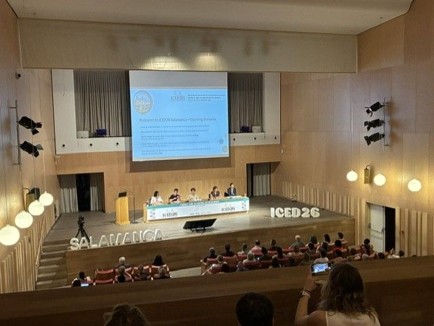
The conference theme placed agency at its core. What was particularly interesting, however, was the range of interpretations and perspectives surrounding the concept. Agency was discussed in relation to students and faculty, but also to academic developers themselves, teaching and learning centres, and institutions. Across the contributions, one overarching question emerged: what conditions enable people and organisations to genuinely exercise agency and transform their contexts?
From Faculty Development to Institutional Transformation
A first reflection concerns the role of academic development itself. Many contributions implicitly or explicitly challenged a conception of academic development centred primarily on courses and workshops for faculty. Centers for Teaching and Learning (CTLs) emerged as hubs connecting people and structures, incubators of innovation, spaces for generating and circulating knowledge, and agents of organisational learning. One study of a Japanese CTL, for example, showed how apparently small-scale activities — individual consultations, Faculty Cafés, or informal spaces for interdisciplinary dialogue — can gradually build networks, trust, and a shared sense of responsibility for teaching and learning. Institutional transformation does not necessarily begin with major reforms: it can develop cumulatively through relationships and conversations that ultimately contribute to changing cultures.
Other contributions broadened this perspective further. An analysis of units responsible for faculty development across several Asian universities showed that many have taken on roles extending far beyond professional development: staff development, institutional research, quality assurance, curriculum development, learning support, and digital transformation. The question, then, is no longer simply what professional development we offer faculty, but what role academic development plays within the institutional ecosystem.
This leads to another uncomfortable but necessary question: if we expect academic developers to be agents of transformation, how much agency do they themselves have? Contributions explored their professional identity, strategic positioning, leadership, capacity to act in times of crisis, and location within the third space between academia, management, research, and institutional policy. The academic developer emerged less as someone who “transmits good practice” and more as a broker, facilitator, connector, researcher, and change agent working across organisational levels and cultures.
Strategy Matters
Another important debate concerned how to move from valuable but isolated initiatives towards genuine institutional capacity for transformation.
One contribution on the evaluation of CTLs questioned, for example, the continued tendency to assess their impact primarily through numbers of courses, participants, or satisfaction ratings. Instead, it proposed considering the micro, meso, macro, and even mega levels simultaneously: what changes for an individual faculty member, but also what changes within a programme, a department, an institutional policy, or the relationship between the university and its wider environment. From this perspective, evaluating academic development means asking about changes in teaching cultures, institutional capacity for innovation, collaboration across units, and influence on policies and strategies.
The professionalisation of university teaching raises a similar issue. European research presented at the conference showed that the existence of pedagogical training does not necessarily mean that the professional development of university teachers has become institutionalised. Significant differences persist across countries and, importantly, links between professional development, mentoring, Scholarship of Teaching and Learning (SoTL), evaluation, and academic career progression remain weak. The challenge is to move from a collection of professional development opportunities towards coherent ecosystems of professional learning, connected to the recognition of teaching and to institutional strategies.
Agency Does Not Mean Acting Alone
Perhaps one of the most interesting ideas emerging from the conference was the questioning of an overly individual interpretation of agency. The capacity to act does not depend solely on an individual’s motivation or competence. It also depends on structures, relationships, and whether conditions exist that enable people to take risks, experiment, and participate in decision-making.
This is why trust, belonging, wellbeing, care, relationships, and community appeared repeatedly throughout the programme. One symposium argued that academic developers, given their position within institutions, need to build matrices of trusting relationships. Other contributions described them as brokers of trust and even considered whether trust-building itself should be understood as an explicit academic development strategy.
From this perspective, trust is not simply about creating a “good atmosphere”; it has a strategic dimension. It enables people to question practices, acknowledge uncertainty, experiment, collaborate, and engage in difficult conversations. The same applies to wellbeing, belonging, and mattering: these were not presented as peripheral concerns, but as conditions that enable students and faculty to participate and exercise agency.
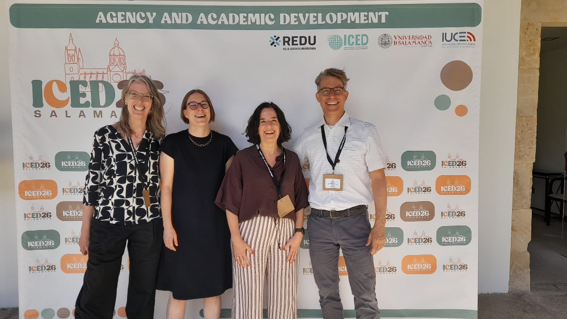
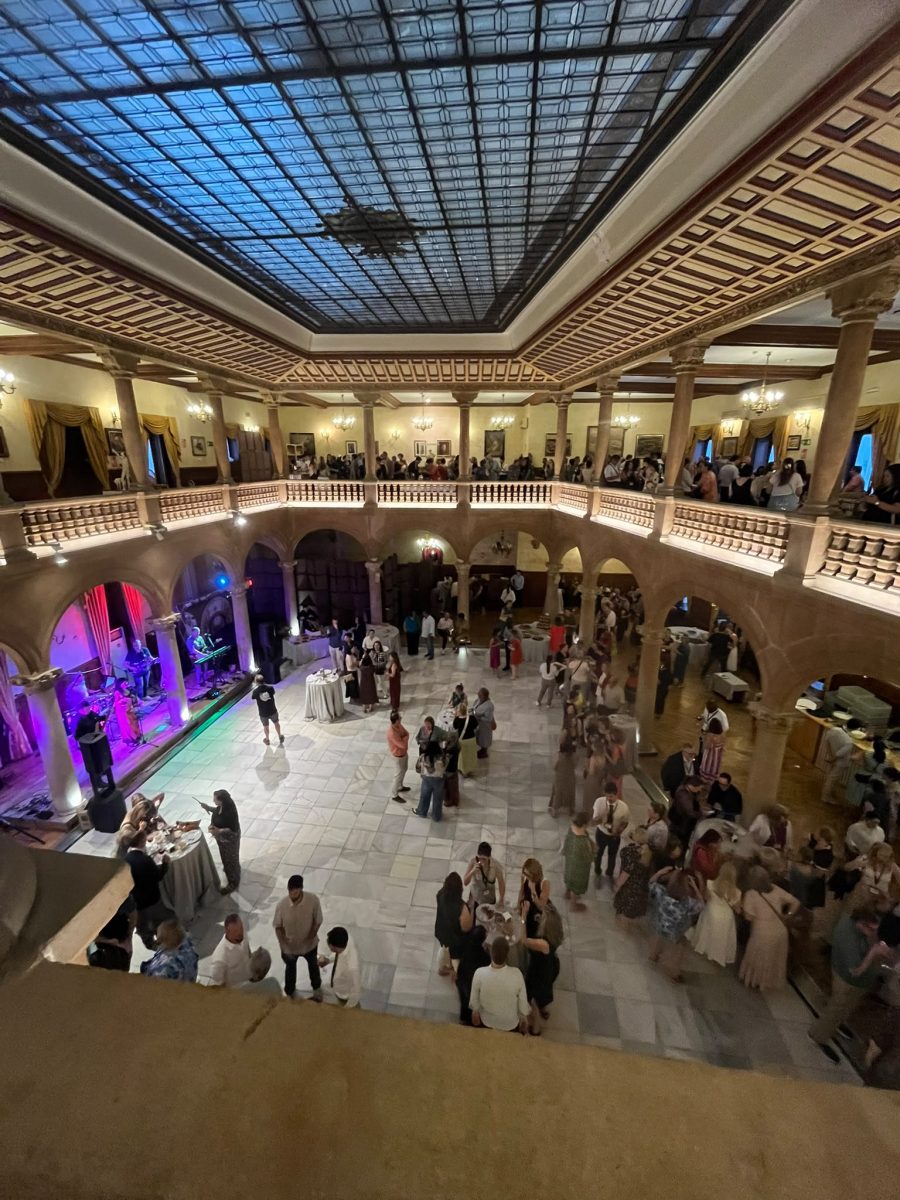
And here, the content of the conference resonated with the experience of agency at ICED26 itself. There was a great deal of conversation in Salamanca. Papers sat alongside workshops, collaborative spaces, ICED Talks, posters, symposia, and Doctoral Colloquia, creating different ways of presenting knowledge, but above all of discussing and constructing it collectively. The sense of proximity, the shared spaces, and the conversations between sessions were an important part of the experience.
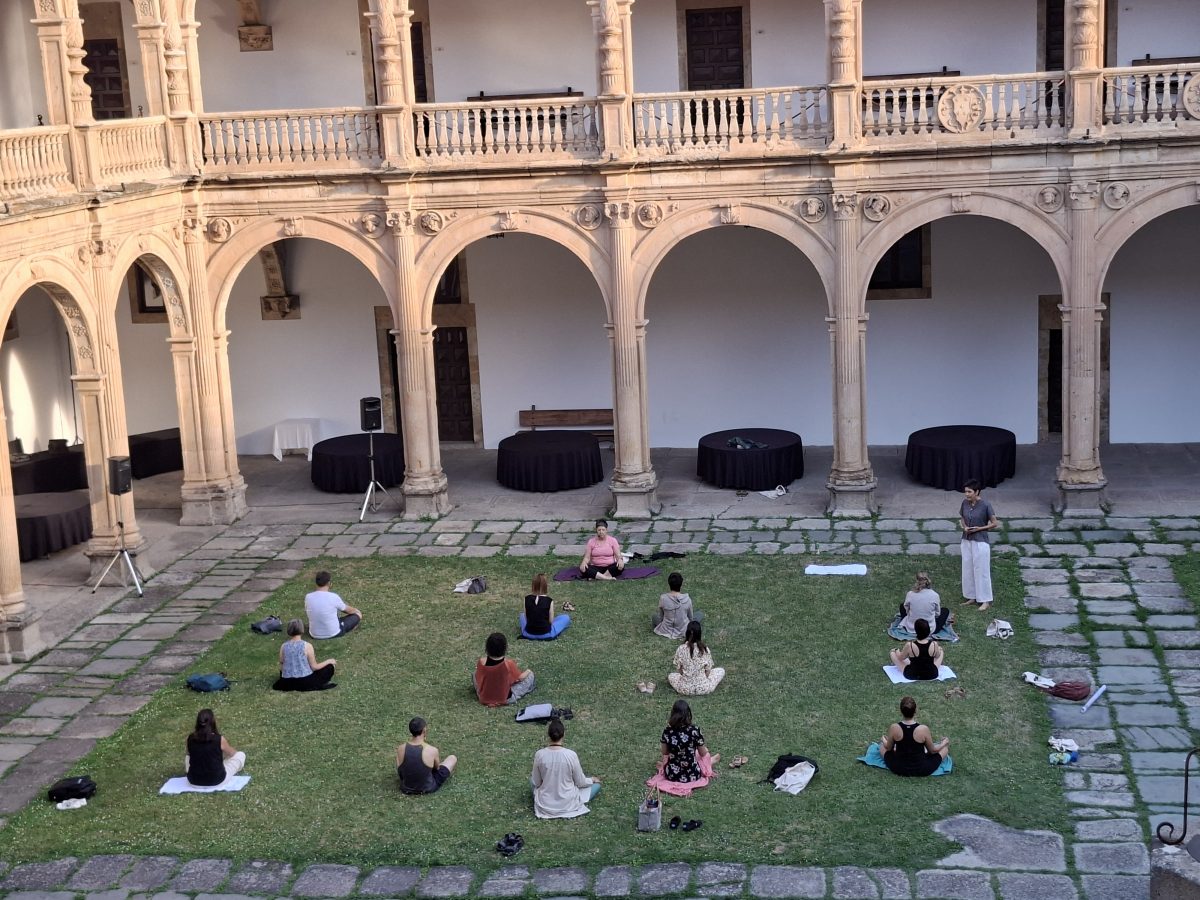
At the same time, the combination of in-person, hybrid, and online formats broadened opportunities for participation. Keynotes, symposia, and ICED Talks could be followed remotely, while paper sessions allowed online participation and presentations. In addition, although English served as the common language, oral presentations could also be delivered in Spanish and French. Inclusion, therefore, was not only a topic on the programme but also a feature of the conference design itself: who can be present, in what ways, and under what conditions?
What Do We Take Away from ICED26?
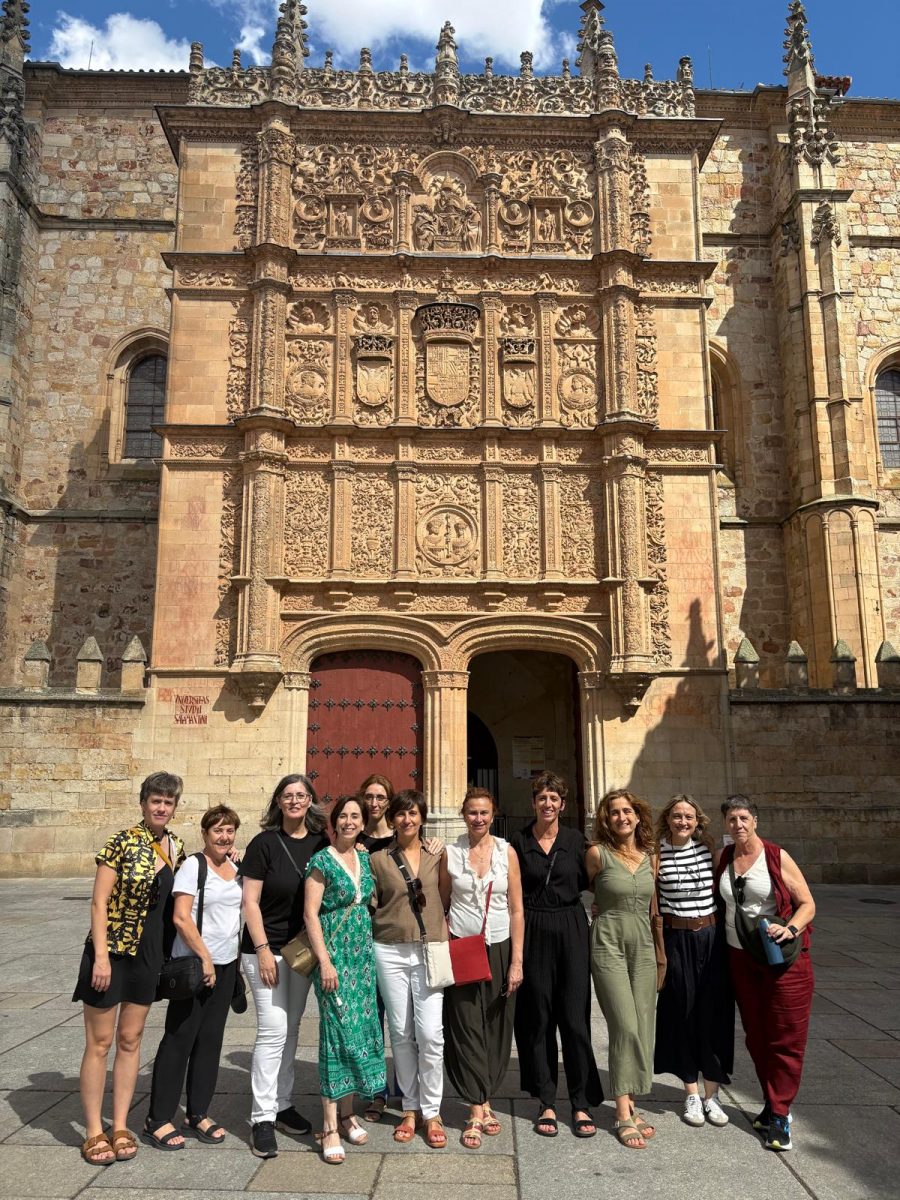
Not only a sublime gastronomic experience — and some exquisite jamón; not only the opportunity to be in Salamanca and enjoy its beauty; not only the chance to meet experts from so many countries, share ideas, debate, and confront different perspectives on the challenges facing teaching, higher education research, and academic development.
We also take away from ICED26 many reflections and questions. Perhaps one of the most important is precisely the one that ran throughout the conference: what does it mean to have agency in today’s university, and what conditions make it possible to exercise it? We were not looking for a single answer. Instead, the contributions and conversations over those days enabled us to develop a more complex understanding of agency and, in particular, of the conditions that enable or constrain it.
In a context shaped by the emergence of generative AI, the need to rethink assessment, new demands on faculty, the still insufficient recognition of teaching, inequalities, internationalisation, and institutional transformation, academic development is expanding its sphere of action.
ICED26 revealed a field that is no longer asking only how to improve teaching, but also how to create the conditions for faculty, students, academic developers, centres, and communities to participate, make decisions, and actively shape the university.
And this also requires us to rethink our own role. Perhaps the challenge for academic development centres and professionals is not to always have the answer, nor to directly lead every process of transformation. Rather, it may be to generate knowledge, connect actors and different levels of the institution, create spaces of trust, accompany processes, make possibilities visible, and contribute to structures in which others can develop and exercise their own agency.
This is probably one of the most valuable ideas I take away from Salamanca: educational transformation does not happen simply by developing individuals or accumulating innovation initiatives. It is built by creating relationships, capabilities, spaces of trust, and institutional conditions that enable people to grow, participate, and act together.
Mònica Feixas, Convenor ICED26, Zurich University of Teacher Education, monica.feixas@phzh.ch